
If you've ever spent hours sifting through technical datasheets, only to feel more confused about which alumina powder is right for your ceramic project, you're not alone. Selecting the optimal material is a critical decision that directly impacts product performance, process efficiency, and your bottom line. At Nextgen Advanced Materials, we speak with manufacturers daily who share this frustration. The market is flooded with options, but not all alumina powder is created equal. This guide, drawn from our deep industry expertise, will help you ask the right questions and understand the key parameters that matter most.
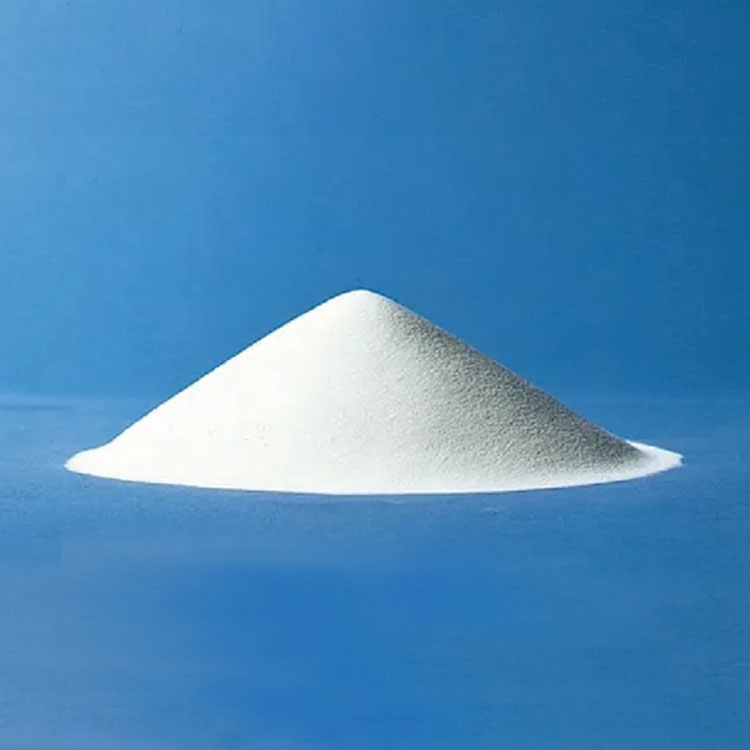
What Are the Most Critical Purity and Chemical Composition Factors
Purity is the cornerstone of performance for high-tech ceramics. Impurities, even in trace amounts, can drastically alter sintering behavior, final density, and mechanical properties. When evaluating an alumina powder, don't just look at the headline purity percentage (e.g., 99.5% or 99.8%). You must scrutinize the certificate of analysis for specific impurity limits. For instance, silica (SiO₂) and soda (Na₂O) can form low-melting glassy phases, degrading high-temperature stability. At Nextgen Advanced Materials, our advanced processing ensures consistently low levels of these critical contaminants. We provide transparent, batch-specific data so you can trust the chemistry of every kilogram.
Key Questions to Ask Your Supplier:
What is the exact assay of Al₂O₃?
Can you provide a full trace element analysis?
How do you control and minimize alkali metal content?
How Does Particle Size and Distribution Influence My Final Product
This is where the magic—or the problems—happen. Particle size dictates packing density, which in turn governs shrinkage, porosity, and strength. A narrow, mono-modal distribution is often preferable for achieving uniform, predictable sintering.
| Particle Size Parameter | Impact on Ceramic Manufacturing | Nextgen Advanced Materials Typical Specification |
|---|---|---|
| Average Particle Size (D50) | Controls sintering temperature & rate. Finer powders sinter at lower temps but may handle poorly. | Tailored between 0.3µm to 5.0µm for application needs. |
| Particle Size Distribution | A wide distribution can improve green density but lead to differential sintering and warping. | Tight control for consistent, repeatable results. |
| Surface Area | Higher surface area increases sintering drive but can raise viscosity in slurries. | Precisely measured and reported for process planning. |
Choosing the wrong profile here is a common pain point. Our technical team at Nextgen Advanced Materials specializes in matching our powder's morphology to your specific forming process, whether it's dry pressing, slip casting, or tape casting.
Why Should I Care About Crystal Phase and Morphology
Not all alumina powder particles are shaped the same. The crystal phase (typically alpha-phase for final ceramics) and the particle morphology (spherical, granular, or platelet) are vital. Alpha-phase alumina is the stable, high-strength phase required for the final product. Using a powder that converts to alpha-phase during sintering can cause uncontrolled shrinkage. Our powders are pre-calcined to the alpha-phase, ensuring dimensional stability. Furthermore, a spherical morphology often flows better and packs more uniformly than an angular one, leading to higher green density and more robust handling in automated production lines.
Can the Powder's Flow and Compatibility Make or Break My Process
A powder with perfect chemical and physical specs on paper is useless if it bridges in your hopper or agglomerates in your slurry. Flowability, compaction density, and dispersion behavior are practical, day-to-day concerns. These are influenced by factors like residual moisture, the presence of soft agglomerates, and the supplier's milling and classification technology. This is an area where Nextgen Advanced Materials truly excels. We invest in state-of-the-art processing that delivers not just a lab-grade material, but a production-ready alumina powder engineered for seamless integration into your manufacturing workflow.
Selecting the right alumina powder is a complex but crucial investment in your product's quality and your process's reliability. It requires a supplier who provides not just a commodity, but data, expertise, and consistent partnership. We invite you to move beyond guesswork and generic offerings.
Let's discuss your specific application challenges. Contact us today with your technical requirements, and our engineering team will help you select or tailor the optimal alumina powder solution for your success.