
Abstract: A Metal 3D Printing Workpiece combines additive manufacturing freedom with the mechanical properties of high-performance metal alloys. For engineers and procurement teams seeking complex prototypes, lightweight components, or functional end-use parts, selective laser melting (SLM) offers a practical route beyond many conventional manufacturing limitations. Nextgen Advanced Materials provides customized metal 3D printing solutions with multiple material options, controlled layer thickness, defined dimensional accuracy, and flexible post-processing capabilities.
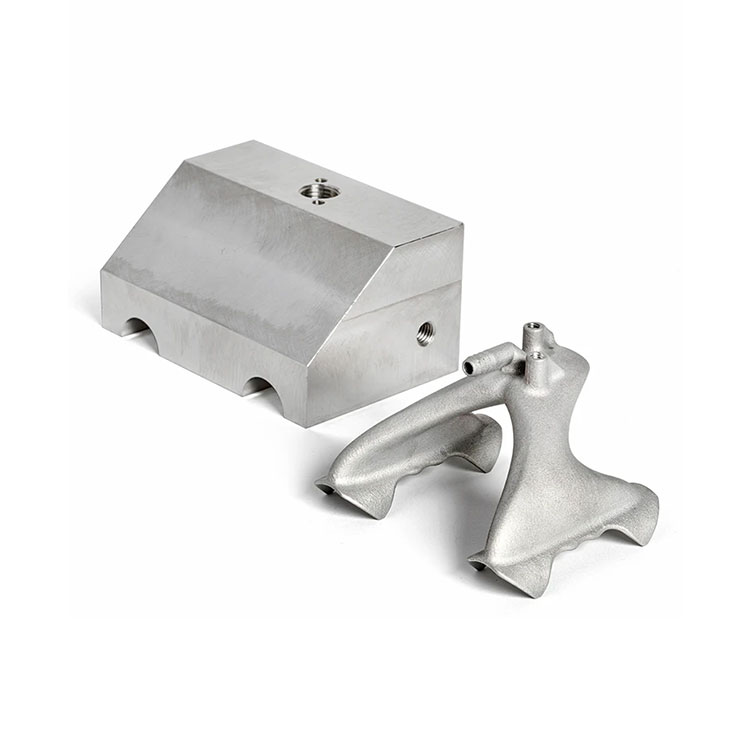
A Metal 3D Printing Workpiece is a metal component produced through an additive manufacturing process in which material is formed layer by layer according to a digital design. Nextgen Advanced Materials describes its solution as selective laser melting (SLM), combining the geometric freedom of 3D printing with the mechanical characteristics of high-performance metal alloys.
Unlike conventional machining, which typically starts with a larger block of material and removes unwanted sections, metal additive manufacturing builds the required geometry progressively. This approach can be particularly valuable when a component contains internal structures, complex contours, lightweighting features, or geometries that are difficult to manufacture using conventional processes.
According to the manufacturer's published specifications, the process is suitable for both fully functional prototypes and end-use components. The maximum standard build envelope is 500 × 280 × 315 mm, while larger components can be produced by designing them as several sub-parts.
Selective laser melting uses a digital 3D model to control the formation of a metal component layer by layer. Metal powder is selectively processed according to the geometry defined by the digital file, allowing complex three-dimensional structures to be produced without requiring a conventional mold or extensive machining setup.
A simplified production workflow includes:
This manufacturing concept provides designers with greater freedom to develop shapes that may be difficult or impractical to create through traditional subtractive manufacturing.
When sourcing a Metal 3D Printing Workpiece, buyers should evaluate more than material alone. Build size, dimensional requirements, layer thickness, minimum wall thickness, and surface condition all influence whether the final component is appropriate for a specific application.
| Specification | Published Capability | Why It Matters |
|---|---|---|
| Maximum build envelope | 500 × 280 × 315 mm | Defines the standard single-build size |
| Layer thickness | 0.04–0.09 mm | Material-dependent control of layer formation |
| Minimum wall thickness | 1 mm standard grade; 0.5 mm performance grade | Helps determine feasible thin-wall geometries |
| Dimensional accuracy | DCTG 6 for 0.5–30 mm; DCTG 8 for 30–400 mm | Provides a reference for dimensional expectations |
| Surface condition | Unfinished parts are typically rough | Post-processing may be required for specific surface requirements |
The published specifications also reference DIN EN ISO 8062-3 and DIN ISO 2768-1 requirements for dimensional tolerances. Actual achievable results should be evaluated against the component geometry, material, orientation, and required finishing process.
Material selection is one of the most important decisions in additive manufacturing because the final workpiece must satisfy the mechanical, thermal, chemical, and operational demands of its application.
The materials listed by Nextgen for its Metal 3D Printing Workpiece include:
These material choices support different design objectives. Aluminum-based materials can be considered where low weight is important, while titanium alloys are widely associated with high-performance lightweight engineering applications. Stainless steel options can be useful where corrosion resistance and mechanical performance are important, while nickel-based Inconel is suited to demanding environments requiring high-temperature performance.
Because material behavior depends on processing conditions and application requirements, engineers should confirm material compatibility and required performance before production.
One of the strongest advantages of metal additive manufacturing is its ability to produce complicated geometries that can be difficult to machine or fabricate using conventional methods. Internal channels, intricate structures, and topology-optimized shapes can be incorporated into a digital design.
Metal 3D printing can support lightweighting strategies by allowing engineers to remove unnecessary material while retaining functional structures. This is valuable for applications where component weight directly affects system efficiency.
Because additive manufacturing works directly from digital models, it can shorten the path from concept to physical prototype. Engineers can evaluate a functional metal component before committing to more extensive conventional tooling or production arrangements.
Traditional manufacturing processes often impose restrictions based on cutting-tool access, mold release, or machining direction. Additive manufacturing changes these design constraints and allows engineers to explore more sophisticated geometries.
Metal 3D printing is also suitable for customized workpieces where conventional mass-production tooling may not be economically attractive. This makes it useful for specialized industrial components, prototypes, replacement parts, and low-volume engineering projects.
The combination of design freedom and metal material performance makes Metal 3D Printing Workpieces suitable for a wide range of engineering scenarios.
Nextgen's broader 3D printing service portfolio covers metal and ceramic additive manufacturing, with its published service description emphasizing prototypes, functional parts, end-use products, material choices, and precision-oriented production.
A successful Metal 3D Printing Workpiece begins with a clear specification. Before requesting a quotation from a manufacturer, supplier, or specialized additive manufacturing factory, procurement teams should prepare the following information:
Providing these details helps the manufacturer evaluate print feasibility, material suitability, post-processing requirements, and production expectations more efficiently.
For buyers comparing customized metal additive manufacturing suppliers, Nextgen's published product information highlights customized production, factory supply, multiple material choices, and the ability to produce complex functional parts.
It is a metal component produced through additive manufacturing, such as selective laser melting, in which material is formed layer by layer from a digital design. It can be used for prototypes as well as functional end-use parts.
The published standard build envelope is 500 × 280 × 315 mm. Components larger than this can potentially be divided into multiple sub-parts and assembled according to the project requirements.
The listed layer thickness is 0.04–0.09 mm, depending on the material. The appropriate setting should be determined according to material characteristics, geometry, productivity, and required quality.
Yes. The manufacturing process is based on digital geometry, making customization a major advantage. Buyers can provide drawings or 3D CAD files and discuss material, dimensions, wall thickness, finishing, and application requirements with the supplier.
Not necessarily. The manufacturer's specifications state that unfinished parts are typically rough, while various post-production finishes are possible. The required finishing process depends on the intended application and surface requirements.
A Metal 3D Printing Workpiece can provide a powerful alternative when conventional manufacturing struggles with complex geometry, lightweight structures, customized designs, or rapid functional prototyping. With SLM-based production, multiple material options, a standard build envelope of 500 × 280 × 315 mm, and layer thickness down to 0.04 mm depending on material, additive manufacturing can support demanding engineering projects when the design and production parameters are properly matched.
If you are sourcing a customized Metal 3D Printing Workpiece for prototyping, industrial production, tooling, or other demanding applications, Nextgen Advanced Materials can help evaluate your design, material requirements, dimensions, and production needs. Contact us today to discuss your project and request a customized solution for your next metal 3D printing application.