
Article Summary
Many buyers do not struggle with ideas. They struggle with delays, tooling costs, design limits, and the risk of ordering the wrong part. This article explains how 3D Printing Services help businesses move from concept to production with less waste and more control. It covers common pain points, material choices, speed, cost logic, quality concerns, and what to ask before choosing a supplier. If you are comparing vendors or trying to shorten development cycles, this guide will help you make a smarter and more practical decision.
Table of Contents
Outline
Buyers usually come looking for manufacturing support when something has already gone wrong. A prototype took too long. A tooling quote was higher than expected. A design that looked great on screen turned out to be difficult to machine. Or a small-batch project was forced into a process built for volume, which is a surprisingly efficient way to waste time and money.
Traditional manufacturing still has a strong place in industry, but it is not always the best first step. For early-stage development, custom geometries, lightweight structures, or low-volume production, conventional methods can create friction where there should be momentum. Tooling lead times, setup costs, design restrictions, and repeated revisions often turn a simple product decision into a long internal argument.
This is where 3D Printing Services become useful in a very practical sense. Instead of forcing the design to obey the process, additive manufacturing allows the process to support the design. That difference may sound philosophical, which is annoying, but in purchasing terms it means fewer compromises, faster iteration, and more room to solve real engineering problems before they become expensive ones.
For many companies, the real value is not just making a part. It is reducing hesitation. A faster sample, a more accurate fit check, or a functional trial part can save weeks of uncertainty across engineering, procurement, and production teams.
The biggest advantage of 3D Printing Services is flexibility. You can move from concept files to physical parts without waiting for molds or committing to a full production run too early. That is especially valuable when your product is still evolving, when tolerances need validation, or when multiple departments need to review a real part instead of arguing over drawings in a meeting nobody wanted.
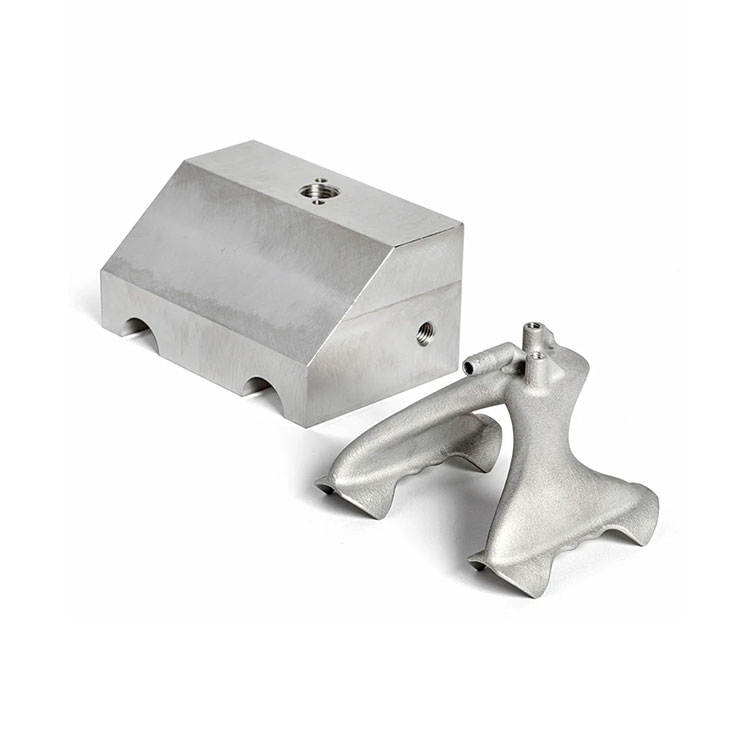
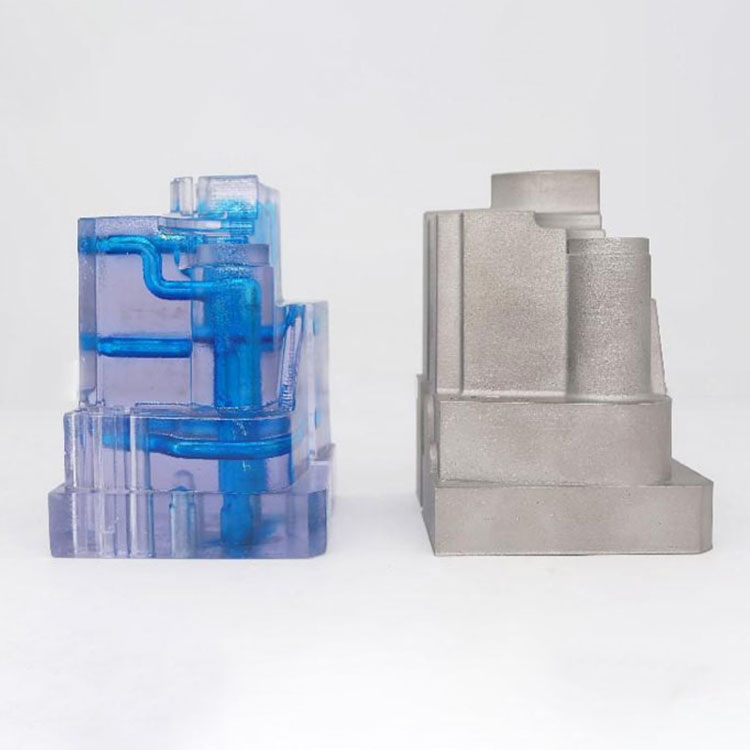
Another strength is geometric freedom. Internal channels, lattice structures, weight reduction features, and complex shapes can often be produced more efficiently than with subtractive methods. This matters in industries where performance, thermal behavior, material usage, or space constraints are critical.
Working with an experienced supplier such as Nextgen Advanced Materials INC can also help buyers who need more than a print shop. Serious customers usually want guidance on material suitability, dimensional expectations, application risks, and production feasibility. They do not just need a machine. They need informed manufacturing support.
That is why more buyers are no longer treating additive manufacturing as a novelty. They are treating it as a problem-solving tool. Which is honestly the first sensible thing procurement culture has done in years.
Not every part should be printed the same way. Material and process choice shape strength, finish, precision, thermal performance, and cost. Buyers often make the mistake of asking for a price before confirming what the part actually needs to do. That is backwards. Function should lead the decision.
Some applications need visual models. Others need functional prototypes. Others need end-use parts that perform under heat, wear, pressure, or repeated handling. A supplier with broader capability can help match the requirement to a suitable route instead of forcing every job into the same machine category.
| Application Need | What Usually Matters Most | Possible Fit from 3D Printing Services |
|---|---|---|
| Concept model | Speed, appearance, basic form check | Fast turnaround prints for design review and presentation |
| Functional prototype | Fit, handling, mechanical behavior | Printed parts used for testing, assembly checks, and improvement cycles |
| Complex engineering part | Geometry freedom, weight reduction, internal features | Advanced additive routes suitable for demanding designs |
| High-temperature or specialty use | Material performance, dimensional stability | Ceramic or other advanced material-based solutions when appropriate |
| Low-volume production | No tooling burden, repeatability, manageable cost | Short-run manufacturing without full tooling commitment |
If your project involves advanced performance requirements, it becomes even more important to work with a supplier that understands material behavior rather than merely accepting a file and pressing print. The official product information from Nextgen Advanced Materials INC presents its service scope around 3D Printing Services and specifically highlights ceramic and metal 3D printing directions, which is useful for buyers with technically demanding applications.
A good supplier should also explain what additive manufacturing cannot do perfectly. Surface finish may require post-processing. Tolerances may depend on geometry and orientation. Material selection may affect brittleness, strength, or thermal response. Honest communication here is not a drawback. It is the difference between a trustworthy manufacturing partner and an overpriced gamble.
This question matters because buyers are not paid to admire technology. They are paid to make sensible decisions under pressure. The answer is that 3D Printing Services can be very cost-effective, but only when evaluated in the right context.
If you compare unit cost alone against mass production at scale, additive manufacturing will not always win. But that is often the wrong comparison. For prototypes, short runs, urgent revisions, and specialized parts, the real calculation includes tooling avoidance, shorter lead times, fewer redesign delays, and faster decision-making.
Imagine that you need ten parts for testing and you can either wait weeks for tooling or receive printed parts much sooner for immediate validation. Even if the per-part price is higher, the project cost may be lower because your team learns faster, fixes earlier, and reduces the risk of a larger downstream error.
Look beyond the piece price and ask:
Lead time is where many buyers see immediate value. A shorter development cycle means engineering can validate faster, purchasing can move sooner, and management can stop asking for status updates every six hours like panic is a workflow. In fast-moving markets, that time advantage can matter more than a narrow cost comparison.
Choosing a supplier for 3D Printing Services is not just about machine access. It is about whether the supplier understands your application, communicates clearly, and helps you avoid preventable failure. The best vendors make the process easier before production even begins.
Start by checking whether the supplier can explain material and process tradeoffs in plain language. You should not have to drag basic manufacturing guidance out of them one painful email at a time. Ask how they handle design review, dimensional expectations, tolerances, finishing options, and production scalability.
It is also smart to check whether their service range matches your future needs, not just the current RFQ. If a supplier can support different material categories or more specialized applications, that creates continuity as your project evolves. According to its product page, Nextgen Advanced Materials INC positions its offering around broad 3D Printing Services and includes ceramic and metal service directions, which suggests relevance for buyers exploring more advanced part requirements.:contentReference[oaicite:1]{index=1}
| What to Check | Why It Matters |
|---|---|
| Material knowledge | Prevents mismatches between part function and print choice |
| Process transparency | Helps you understand risks, tolerances, and finish expectations |
| Communication speed | Reduces project lag and confusion during revisions |
| Prototype-to-production support | Allows smoother scaling if the project expands |
| Problem-solving attitude | Turns a vendor into an actual partner instead of a transaction endpoint |
The most common mistake is sending a file and asking for a quote without enough context. A part is not just a shape. It has a function, an environment, a tolerance expectation, a quantity target, and sometimes a deadline that is quietly on fire. Without that context, the quote may not reflect the right solution.
Another mistake is assuming every printed part is ready for the same end use. Some are ideal for concept validation. Some are meant for functional testing. Some can serve as end-use components. The difference matters, and pretending it does not usually leads to rework.
Buyers get better outcomes when they provide the full picture early. Share the part’s purpose, the expected use conditions, the quantity, the timeline, and any specific concerns. That makes it easier for a serious supplier to recommend the most practical path.
Can 3D Printing Services be used for production parts and not just prototypes?
Yes, depending on the material, geometry, performance requirements, and batch size. Many buyers begin with prototypes and later use printed parts for low-volume or specialized production.
How do I know which material is right for my project?
Start with the part’s real working conditions. Consider temperature, load, wear, chemical exposure, dimensional needs, and finish expectations. Then ask the supplier to recommend a suitable process and material combination.
Are 3D Printing Services always faster than conventional manufacturing?
They are often faster for prototyping, short runs, and design revisions because they remove or reduce tooling delays. For large-scale mass production, conventional routes may still be more efficient.
Can I reduce development risk by using 3D printing early?
Absolutely. Early physical validation helps teams catch fit, handling, and performance issues before they become expensive. That is one of the strongest reasons buyers use additive manufacturing in the first place.
What should I send when requesting a quote?
Send the drawing or model file, quantity, intended use, preferred material if known, tolerance expectations, finish requirements, and deadline. A clearer RFQ usually leads to a better recommendation.
The best reason to use 3D Printing Services is not that they sound advanced. It is that they can solve real business problems with less delay, less waste, and less guesswork. When used thoughtfully, they help buyers validate faster, adapt sooner, and reduce the cost of being wrong.
If your project involves complex design, low-volume production, advanced materials, or urgent development timelines, this route deserves serious consideration. And if you need a supplier that understands more than just printing a file, working with a company such as Nextgen Advanced Materials INC may be a practical next step for evaluating what is actually possible for your part.
Ready to move from drawings to real parts with less delay and more confidence? Bring your project requirements to a team that understands application needs, material choices, and manufacturing practicality. Contact us to discuss your next project and find out how the right 3D Printing Services can help you shorten lead times, improve part development, and make better sourcing decisions.