
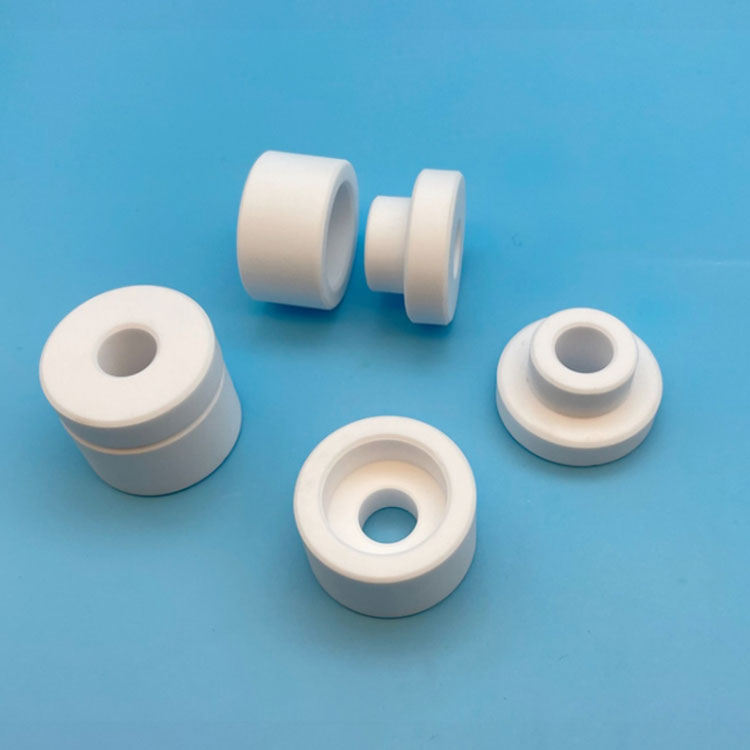
Electronic manufacturing increasingly depends on materials that can provide reliable electrical insulation, effective heat management, chemical stability, and dimensional consistency. Alumina Ceramic is widely used in advanced electronic applications because its aluminum oxide composition combines high hardness, thermal conductivity, electrical insulation, corrosion resistance, and a high melting point. These characteristics make it relevant to semiconductor processing equipment, electronic insulation components, precision fixtures, and other applications where conventional materials may not meet demanding operating conditions.
However, selecting a ceramic material requires more than comparing a general property list. Engineers must consider purity, density, mechanical strength, thermal behaviour, dielectric performance, surface finish, and machining tolerances according to the intended application. Nextgen Advanced Materials INC supplies standard and tailor-made alumina ceramic solutions, supported by research and development, laboratory testing, technical guidance, and application-oriented product recommendations. Understanding how these material characteristics relate to actual manufacturing requirements helps buyers specify components more accurately and reduce material-related design risks.
1. How Does Alumina Support Electrical Insulation and Thermal Management?
2. Why Is Alumina Suitable for Semiconductor and Precision Electronic Manufacturing?
3. What Material Parameters Should Engineers Evaluate Before Purchasing?
Electrical insulation and heat dissipation are two important requirements in electronic manufacturing. Components may need to prevent unwanted current flow while transferring heat away from sensitive areas. These requirements can appear contradictory because a material must restrict electrical conduction without necessarily acting as a thermal barrier. Alumina is useful in this context because aluminum oxide ceramics combine electrical insulating properties with thermal conductivity that can support heat transfer in appropriately designed assemblies.
In electronic equipment, electrical insulation helps separate conductive components, maintain defined current paths, and reduce the risk of unintended electrical contact. Insulating materials may be used around power components, conductive terminals, heating elements, semiconductor assemblies, and other structures where electrical separation is required. The material must retain its insulating performance under the voltage, temperature, and environmental conditions expected during operation.
Aluminum oxide is an electrically insulating ceramic. Its performance makes it suitable for components that need to maintain electrical separation while remaining dimensionally stable in demanding environments. Unlike many polymer-based materials, alumina also has a high melting point and strong resistance to elevated temperatures. This can be important in equipment where repeated heating, localised heat generation, or exposure to hot process environments would place additional demands on the insulating structure.
At the same time, thermal conductivity is an important property when a component must transfer heat rather than simply withstand it. Heat generated by power electronics, semiconductor processing equipment, and other electronic assemblies needs a controlled path to prevent excessive local temperatures. An alumina component may serve as an insulating structural element while also contributing to thermal transfer, depending on its geometry, material grade, thickness, and interface with neighbouring components.
Electronic assemblies often contain several materials with different functions. Metals provide electrical conduction and mechanical support, polymers may provide insulation or sealing, and ceramics can offer a combination of thermal, electrical, and structural characteristics. Material selection becomes more difficult when a single component needs to meet several requirements at once.
Alumina is considered when engineers need a material that can perform several roles within a compact design. Its properties may be relevant in the following situations:
These properties should be evaluated as a combination rather than as independent selling points. For example, a ceramic component used near a heat-generating electronic device must be assessed for thermal conductivity, thickness, contact pressure, and the thermal resistance of the surrounding interfaces. A material with suitable bulk thermal properties may still perform poorly if the assembly contains air gaps, unsuitable bonding layers, or inadequate contact surfaces.
Thermal performance is not determined by material composition alone. Component thickness, surface area, shape, mounting arrangement, and contact conditions all influence the amount of heat that can move through an assembly. A thicker ceramic plate may provide greater mechanical rigidity, but it can also increase the distance heat must travel. A thinner component may reduce the thermal path but introduce additional requirements for strength, flatness, and handling.
Engineers should therefore evaluate the complete thermal path. This includes the heat source, ceramic component, interface material, heat sink or supporting structure, and surrounding environment. The temperature difference across each part of the assembly affects the final operating temperature. In a compact electronic product, even a small interface resistance can reduce the benefit of selecting a material with favourable thermal conductivity.
Surface finish is another factor. Contact surfaces that are uneven or poorly matched can create microscopic air gaps. Since air is generally a poor thermal conductor compared with solid ceramic and metal materials, these gaps can increase thermal resistance. Depending on the application, surface flatness, roughness, parallelism, and dimensional tolerance may therefore need to be specified alongside the material grade.
Our engineering evaluation should begin with the actual thermal requirement rather than a general assumption that all alumina grades perform identically. Different purity levels and manufacturing processes can produce different property profiles. The required thermal performance should be matched to the grade and component geometry confirmed in the technical documentation.
Electrical insulation performance should be checked against the actual operating voltage and environment. Engineers may need to evaluate volume resistivity, dielectric strength, dielectric loss, insulation resistance, and the behaviour of the material at elevated temperatures. These properties are related, but they are not interchangeable. A material with high electrical resistivity does not automatically have a particular dielectric strength under every test condition.
For practical selection, the following questions should be addressed:
Surface contamination deserves particular attention in electronic manufacturing. Dust, metallic particles, chemical residues, and moisture can affect the electrical behaviour of an insulating surface. The required cleanliness level depends on the equipment and process. Semiconductor-related applications may have stricter contamination controls than general industrial assemblies.
Nextgen Advanced Materials INC provides material guidance and laboratory testing support to help customers evaluate requirements for their intended applications. Our product recommendations should be based on the electrical conditions, thermal load, geometry, and relevant test methods supplied by the customer. This approach helps establish whether a standard grade is suitable or whether a customised material specification needs to be discussed.
Semiconductor manufacturing places demanding requirements on the materials used in process equipment. Components may be exposed to elevated temperatures, vacuum environments, reactive gases, plasma-related processes, chemical cleaning, and repeated thermal cycles. A material used in this environment must maintain its relevant properties without introducing unacceptable contamination or dimensional changes.
Alumina is an established advanced ceramic material for selected semiconductor equipment applications. Its high-temperature capability, electrical insulation, hardness, and chemical resistance make it relevant to components used around process chambers and precision equipment. High-purity alumina is particularly important in applications where material purity and contamination control are critical considerations.
The semiconductor industry uses specialised equipment for processes such as chemical vapour deposition, ion implantation, and photolithography. These processes have different operating conditions, so no single ceramic grade should be assumed suitable for every stage. The component's exposure to process gases, plasma, chemicals, temperature changes, and mechanical loads must be considered before material approval.
Material purity can influence the suitability of a ceramic component for semiconductor manufacturing. Unwanted impurities may create contamination risks, affect electrical properties, or interact with process environments. For equipment used near sensitive wafers or process chambers, engineers may need to control the chemical composition of the ceramic and the presence of trace metallic elements.
High-purity alumina is used in selected semiconductor manufacturing applications because it can provide a stable ceramic structure while supporting strict material requirements. However, the phrase high purity should not be treated as a complete technical specification. Buyers need to establish the required Al₂O₃ content, impurity limits, test method, and acceptable variation for the intended process.
Purity requirements can vary according to component location and process exposure. A structural support part outside the main process zone may have different requirements from a component directly exposed to process gases or positioned near sensitive wafer surfaces. A suitable specification should therefore identify the function and location of the part rather than applying the highest possible purity level to every component without justification.
For semiconductor equipment, material evaluation may include:
High-purity material is not automatically the best choice for every component. Engineers must balance purity requirements with mechanical performance, machining complexity, availability, and total component cost. Selecting a grade that exceeds the process requirement may add cost without providing a meaningful improvement in equipment performance.
Semiconductor equipment can encounter process gases, cleaning chemicals, and other reactive substances. The chemical compatibility of each component depends on the specific substance, concentration, temperature, exposure time, and process conditions. Alumina offers corrosion resistance in many environments, but it should not be described as universally resistant to every chemical.
Before approving a ceramic component, engineers should identify all substances that may contact the material during normal operation, cleaning, maintenance, and abnormal process conditions. A compatibility review should consider both direct exposure and possible residues left on the surface. Where necessary, testing should reproduce the relevant concentration and temperature rather than relying solely on a broad material description.
Surface quality can influence chemical performance. Rough or porous surfaces may retain residues more readily than properly finished surfaces, depending on the manufacturing method and component geometry. For parts used in clean process environments, buyers may need to specify surface finish, cleaning procedures, packaging, and handling requirements.
Our material review should distinguish between the inherent chemical properties of alumina and the performance of a finished component. Machining residues, surface defects, contamination introduced during handling, and the condition of the finished surface can all affect its suitability for a specific process. A material datasheet is an important starting point, but application-specific evaluation remains necessary.
Precision equipment relies on components that fit correctly and maintain their intended position during operation. A ceramic support, insulating plate, spacer, or fixture may need to align with other components within a tightly controlled mechanical assembly. Dimensional variation can affect positioning, contact pressure, thermal interfaces, or the alignment of process equipment.
Machining advanced ceramics requires careful control because alumina is hard and brittle compared with many metals. It cannot always be processed using the same methods applied to aluminium or stainless steel. Grinding, lapping, drilling, and other suitable ceramic machining operations may be required to achieve the final geometry and surface condition.
Designers should identify critical dimensions rather than applying unnecessarily tight tolerances to every feature. A drawing should distinguish between functional dimensions, reference dimensions, mounting interfaces, and non-critical surfaces. This helps manufacturers focus machining and inspection resources on the areas that directly affect component performance.
Common dimensional considerations include:
Because ceramic materials are brittle, edge geometry also deserves attention. Sharp corners and abrupt section changes can create stress concentrations. Suitable radii, chamfers, and component support arrangements can help reduce the risk of damage during assembly and use. The final design should consider both the ceramic's mechanical characteristics and the loads introduced during installation.
Nextgen Advanced Materials INC supports standard and tailor-made material solutions for customers with different equipment requirements. Our technical discussions should include the component drawing, operating environment, required purity, critical tolerances, and inspection expectations. This allows the material and machining requirements to be evaluated together instead of treating them as separate purchasing decisions.
Purchasing an advanced ceramic component requires a clear technical specification. A product description may identify the material as aluminium oxide and list properties such as hardness, insulation, thermal conductivity, and corrosion resistance. However, these general characteristics are not sufficient for engineering approval. The actual values depend on the grade, composition, manufacturing process, test method, and finished component condition.
Engineers should begin by defining the component's function. Is it intended to provide electrical insulation, support a semiconductor wafer, withstand process temperatures, transfer heat, or maintain a precision mechanical position? Some parts perform several functions simultaneously. Identifying the primary and secondary requirements makes it easier to establish which parameters need numerical limits and which can be handled through general material selection.
The following table outlines the main material and component parameters that buyers should review. The confirmed characteristics are distinguished from numerical values that need to be supplied for the exact grade or product configuration.
| Parameter | Material information | What buyers should verify |
| Material composition | Aluminum oxide based ceramic, Al₂O₃ | Exact composition and impurity limits |
| Purity | High-purity grades are available for specialised applications | Al₂O₃ percentage and grade-specific purity certificate |
| Density | Grade and manufacturing dependent | Bulk density and test method |
| Hardness | High hardness is a recognised material characteristic | Numerical hardness value, scale, and test conditions |
| Thermal conductivity | Provides heat-transfer capability | Grade-specific value and measurement temperature |
| Thermal expansion | Relevant to dimensional changes during heating and cooling | Coefficient of thermal expansion and temperature range |
| Electrical resistivity | Electrical insulating properties | Volume resistivity at the specified temperature |
| Dielectric strength | Relevant to electrical insulation design | Test value, specimen thickness, and test method |
| Mechanical strength | Rigid ceramic structure | Flexural strength or other application-relevant strength data |
| Corrosion resistance | Resistance to many chemical environments | Compatibility with the actual chemicals and process conditions |
| Dimensions and tolerances | Available according to product design | Drawing dimensions, critical tolerances, and inspection method |
| Surface finish | Depends on machining and finishing process | Roughness, flatness, parallelism, and cleanliness requirements |
These parameters should be connected to the intended function. For example, a component used primarily as an electrical insulator may require detailed resistivity and dielectric strength information. A thermal management part may require thermal conductivity, expansion, and interface flatness data. A precision fixture may place greater emphasis on dimensional accuracy, mechanical strength, and surface finish.
Alumina grades can differ in purity, microstructure, density, mechanical behaviour, and thermal or electrical performance. A higher-purity grade may be appropriate for sensitive semiconductor applications, while another grade may provide a more economical solution for general industrial insulation or structural use. The correct choice depends on the operating environment and the performance level required by the component.
When comparing suppliers, engineers should avoid relying on a single property. A grade with high hardness may be attractive for wear resistance, but hardness alone does not establish fracture toughness or resistance to impact. Likewise, a high thermal conductivity value does not automatically mean that the finished assembly will achieve a low operating temperature. Component geometry and interface conditions remain important.
A meaningful comparison should use consistent test methods and comparable material conditions. If one supplier reports thermal conductivity at room temperature and another reports it at an elevated temperature, the values cannot be compared directly without understanding the measurement conditions. The same principle applies to hardness, density, dielectric strength, and mechanical testing.
Buyers should request the following information when comparing grades:
Our technical evaluation should focus on the specifications that affect the customer's process. Requesting every possible material value may create unnecessary complexity if some parameters have no relationship to the component's function. A focused specification makes supplier communication more efficient and helps prevent misunderstandings during sampling and production.
The properties of the raw ceramic material are only part of the final product's performance. Manufacturing processes influence microstructure, density, surface condition, dimensional accuracy, and the presence of defects. Powder preparation, forming, sintering, machining, finishing, and inspection all contribute to the quality of the finished component.
During ceramic manufacturing, the starting powder and forming process influence the uniformity of the component. Sintering develops the ceramic structure and affects density and mechanical properties. Subsequent machining may be required to achieve the final dimensions and surface finish. Because alumina is hard and brittle, machining conditions must be controlled to avoid edge chipping, cracks, and unwanted surface damage.
Quality inspection should be based on the drawing and application requirements. Depending on the component, inspection may include:
Not every component requires every test. The inspection plan should be proportional to the risk and function of the part. A simple insulating spacer may have different inspection requirements from a precision component used inside semiconductor process equipment. Defining acceptance criteria before production helps both the buyer and supplier understand what constitutes an acceptable finished product.
Nextgen Advanced Materials INC has approximately ten years of experience in advanced materials supply, with global business activities and research and development capabilities. Our service scope includes standard and customised products, product solutions, technical guidance, laboratory testing, and after-sales support. Our factory and technical resources support customer discussions from initial material selection through product evaluation.
For a customised order, the drawing should identify material grade, purity requirements, dimensions, tolerances, surface finish, quantity, and any special inspection conditions. If the application involves semiconductor processing, the enquiry should also state the process environment and contamination-control requirements. This information helps establish whether a standard product can meet the specification or whether a tailored solution needs to be developed.
Material selection should be validated before a component enters full production. A technically suitable material can still create problems if the finished dimensions do not match the assembly, the surface condition is unsuitable, or the component is exposed to chemicals outside its verified compatibility range. Sample evaluation provides an opportunity to identify these issues before they affect a larger production order.
A practical qualification process can include the following steps:
For semiconductor and electronic manufacturing, the qualification process should also consider contamination risks during transport and handling. Packaging materials, protective separators, storage conditions, and handling procedures may need to meet the cleanliness requirements of the receiving facility. These details are particularly relevant when components are installed near sensitive process areas.
Nextgen Advanced Materials INC works with customers to review standard and tailor-made material requirements. Our team can provide technical guidance and laboratory testing support as part of product evaluation. Our goal is to help customers connect the material specification with the finished component's intended operating conditions, rather than selecting a grade based only on a general product description.
A clear specification also improves communication between engineering, purchasing, and quality teams. Engineering can define the functional requirements, purchasing can compare technically equivalent offers, and quality personnel can establish measurable acceptance criteria. This shared understanding reduces the risk of late-stage changes and helps make material sourcing more predictable.
Alumina ceramic materials help address several important requirements in electronic manufacturing, including electrical insulation, thermal management, high-temperature capability, chemical resistance, hardness, and dimensional stability. Their suitability depends on the specific grade, purity, component geometry, manufacturing process, and operating environment. For semiconductor equipment and precision electronic assemblies, material selection should be supported by verified technical data, appropriate inspection, and application-specific testing. Nextgen Advanced Materials INC provides standard and customised material solutions, technical guidance, and laboratory testing support. Contact our team with your component drawing, required material grade, operating conditions, and critical performance specifications to discuss a suitable solution for your electronic manufacturing project.
Alumina is an aluminum oxide based ceramic with electrical insulating properties, high-temperature capability, and good hardness. It can be used to separate conductive components while maintaining a rigid structure under demanding operating conditions. Its thermal conductivity can also support heat transfer in appropriately designed assemblies. The exact suitability depends on the grade, component thickness, operating voltage, temperature, and required dielectric performance, so engineers should verify the relevant resistivity and dielectric strength data for the selected material.
No. High-purity grades are important for applications where chemical composition and contamination control are critical, but not every component requires the same purity level. Requirements depend on the component's position, process exposure, temperature, and potential contact with sensitive materials or surfaces. Buyers should define the required alumina content and impurity limits according to the equipment process rather than assuming that the highest available purity is always necessary.
Buyers should provide the required material grade, alumina content, impurity limits, component drawing, dimensional tolerances, surface finish, operating temperature, electrical requirements, chemical exposure, and mechanical loading conditions. Relevant material data may include density, hardness, thermal conductivity, thermal expansion, electrical resistivity, dielectric strength, and mechanical strength. The supplier should confirm the applicable test methods and inspection criteria. Sample evaluation is recommended before mass production, particularly for precision components used in semiconductor equipment.